Wind Energy in Pakistan: Unlocking 50,000+ MW of Untapped Potential
daatradeofficial@gmail.com
July 19, 2026
Utilities have raised electricity prices across the country, compelling many homeowners to look for ways to cut back on costs. Also, the unreliable supply of electricity exacerbates the need for many homeowners to install more reliable sources of electricity, i.e., rooftop solar systems. This has caused an increase in the demand for rooftop solar systems.
Net metering is one of the advantages of using solar systems. With this type of system, the electricity generated by the solar system is consumed by the homeowner rather than being sold back to the power company. This decreases the homeowner’s reliance on the national power grid.
If you are thinking of using solar panels in 2026, understanding how net metering works can help you make a more informed investment.
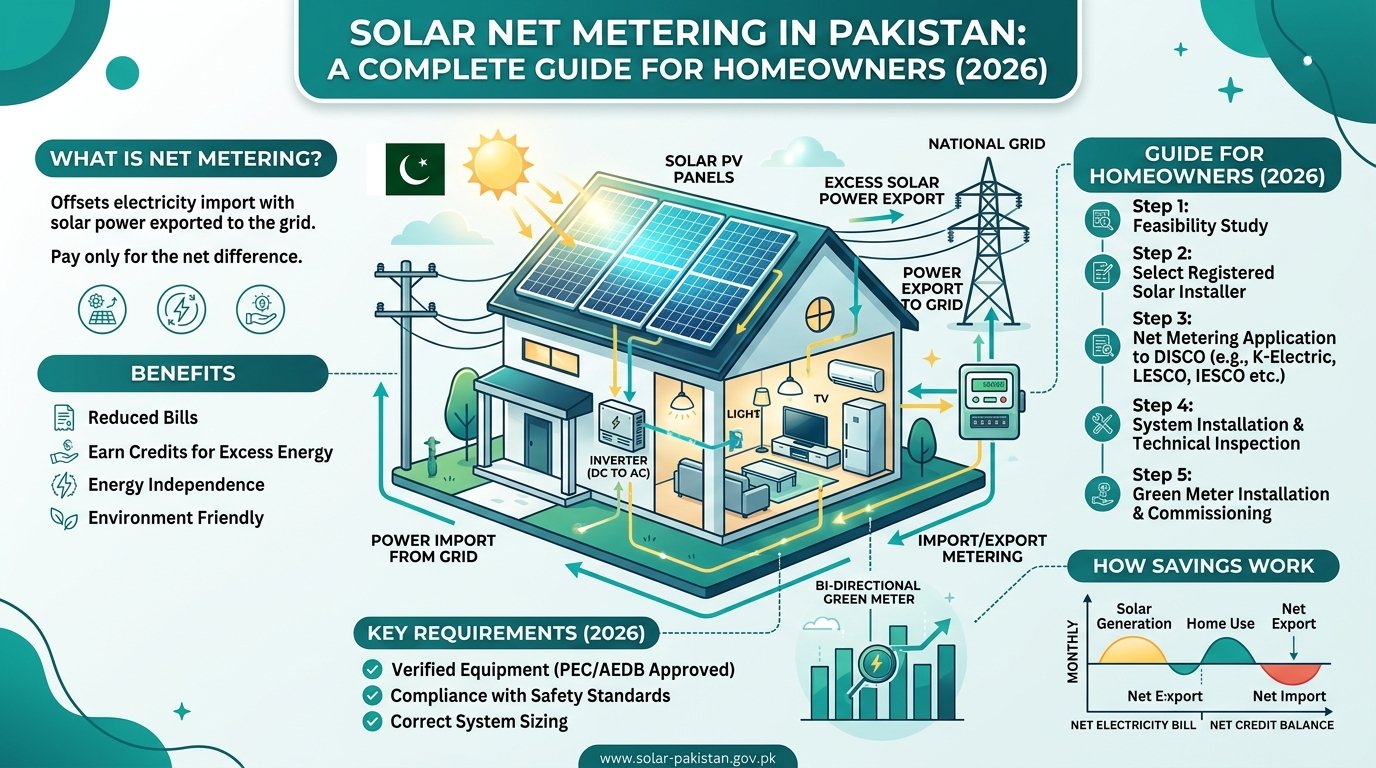
Net metering is a billing system that allows homeowners to export excess electricity generated by their solar panels to the national power grid.
During the day, your solar system produces electricity to power your home. If your system generates more electricity than you are using, the extra units are automatically sent to the grid instead of going to waste.
When your solar panels are not producing enough electricity—such as at night or during cloudy weather—you draw electricity from the grid as usual.
At the end of each billing cycle, your electricity provider calculates the difference between the units you exported and the units you imported. Based on this balance, your monthly electricity bill is adjusted, helping you save money over time.
In simple terms, the national grid acts as an energy exchange system where you supply electricity when production is high and receive it back whenever you need it.
The process is straightforward and involves a few important steps.
The first step is choosing a solar system that matches your household’s electricity consumption. The right system size depends on your monthly energy usage, available rooftop space, and future electricity requirements.
A standard electricity meter only records the electricity you consume. Net metering requires a bi-directional meter, which measures both the electricity you receive from the grid and the surplus electricity your solar system sends back.
This meter keeps an accurate record of imported and exported units.
When sunlight is available, your home uses electricity produced by the solar panels first. If your system generates more electricity than your household needs, the excess energy is automatically exported to the national grid.
The electricity you export is recorded by the bi-directional meter. These exported units are credited against the electricity you consume from the grid later, reducing your overall electricity charges.
At the end of the billing period, your electricity company compares the total units imported from the grid with the units exported through your solar system.
You are billed only for the difference, making your monthly electricity expenses significantly lower. In some cases, homeowners may even carry forward unused energy credits to future billing periods, depending on the applicable regulations.
Several factors make 2026 an ideal time for homeowners to consider solar energy.
Electricity tariffs continue to increase, making conventional power more expensive every year. Installing a solar system helps reduce your dependence on grid electricity and lowers long-term energy costs.
The cost of solar panels and inverters has become more competitive over recent years, while their efficiency and durability have continued to improve. This allows homeowners to recover their investment more quickly.
Pakistan’s net metering policy supports distributed solar energy systems. Consumers sell excess energy to the national grid. This policy has made rooftop solar systems a better economic investment.
When you generate your own power, you become less dependent on the national grid. Energy prices can fluctuate. Outages can happen without warning, and load shedding can leave neighborhoods without power. All these things can disrupt the control you have over your energy consumption. Having your own power generator is a good alternative to being reliant on the national grid.
DaaEner provides complete solar energy solutions for residential, commercial, industrial, and utility-scale projects.
Its services include:
Residential solar installations
Commercial solar systems
Industrial solar solutions
Utility-scale renewable energy projects
Professional engineering and system design
High-quality equipment and reliable project execution
Each solution is designed to improve energy efficiency, reduce operating costs, and deliver dependable long-term performance.
Choosing the right solar system requires careful planning. Before investing, homeowners should evaluate a few important factors.
Every household has different electricity requirements. Your solar system should be designed according to your average monthly consumption, available roof area, and future energy needs.
A properly sized system helps maximize savings without unnecessary investment.
Solar panels and inverters are expected to perform for many years, making quality an important consideration.
Reliable equipment generally delivers better efficiency, stronger warranties, and lower maintenance requirements over its lifetime.
Professional installation plays an important role in the long-term performance of a solar system.
An experienced installer manages system design, safety standards, documentation, and the complete net metering approval process with the relevant electricity distribution company. Proper installation also ensures the system operates efficiently and complies with applicable regulations.
Net metering offers advantages that go beyond lower electricity bills.
As more households generate clean electricity, Pakistan can reduce its dependence on imported fossil fuels while easing pressure on the national power grid. Greater use of renewable energy also supports the country’s long-term sustainability goals and contributes to a cleaner environment.
For homeowners, a rooftop solar system becomes more than just an energy source—it becomes a long-term investment that continues to deliver financial savings for years.
With electricity prices expected to remain high and renewable energy becoming increasingly accessible, installing a solar system with net metering is one of the most practical decisions homeowners can make in 2026.
DaaEner Limited is a renewable energy company providing innovative Synthetic Natural Gas (SNG), solar, and wind energy solutions across Pakistan and international markets.
Operating in compliance with SECP, PEC, NEPRA, PPIB, and OGRA regulations, the company is committed to delivering reliable, efficient, and sustainable energy solutions that support Pakistan’s transition toward a cleaner and more energy-secure future.
Take control of your electricity costs with a customized solar net metering solution from DaaEner Limited. Our experts design and install high-performance solar systems that help homeowners generate clean energy, reduce utility bills, and maximize long-term savings while contributing to a more sustainable future.
DaaEner Limited is committed to delivering innovative renewable energy solutions that drive sustainability, energy efficiency, and long-term value. From solar and wind energy to SNG, battery storage, EV charging, and EPC services, we empower businesses and communities with reliable, future-ready energy infrastructure.